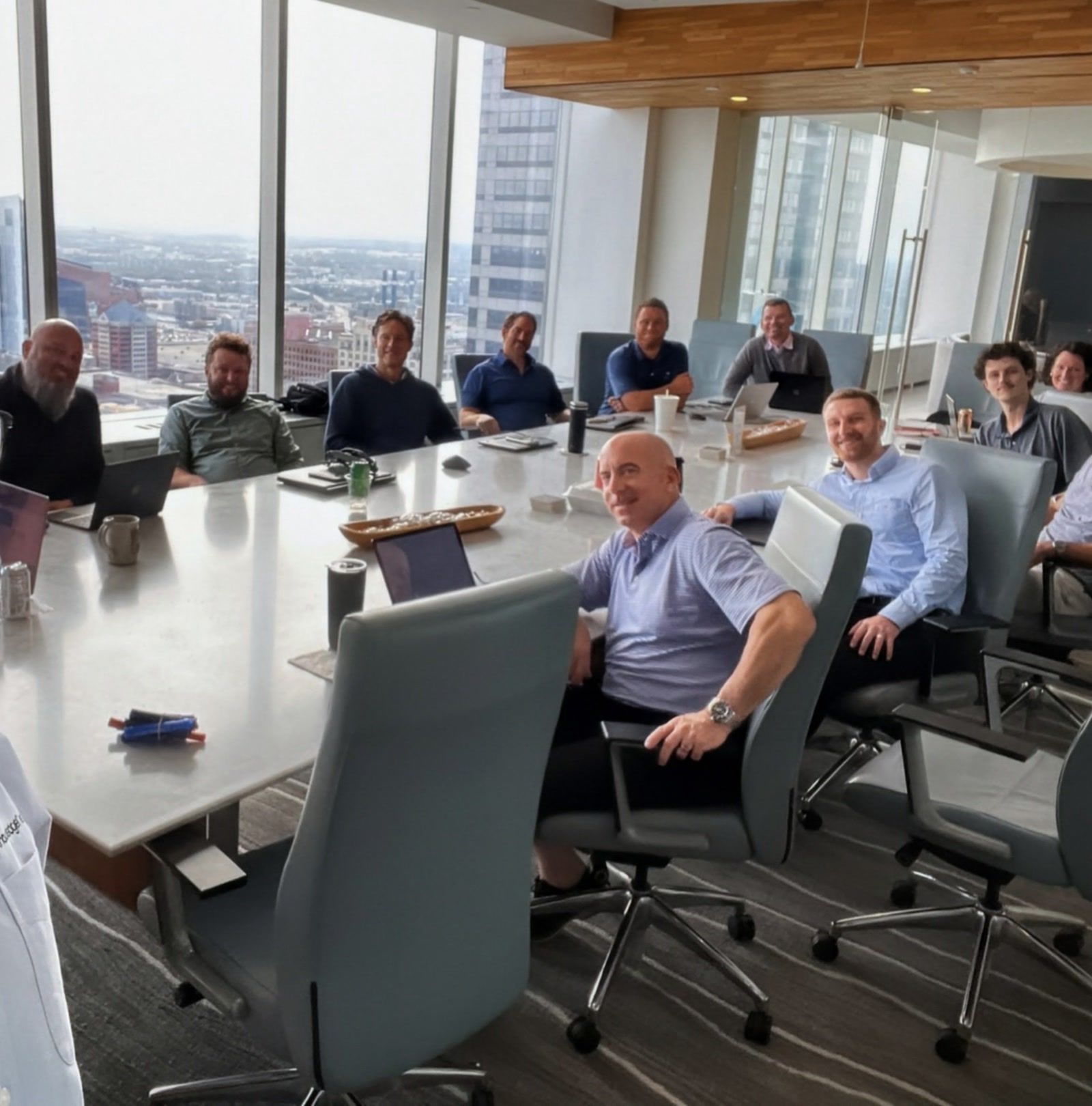
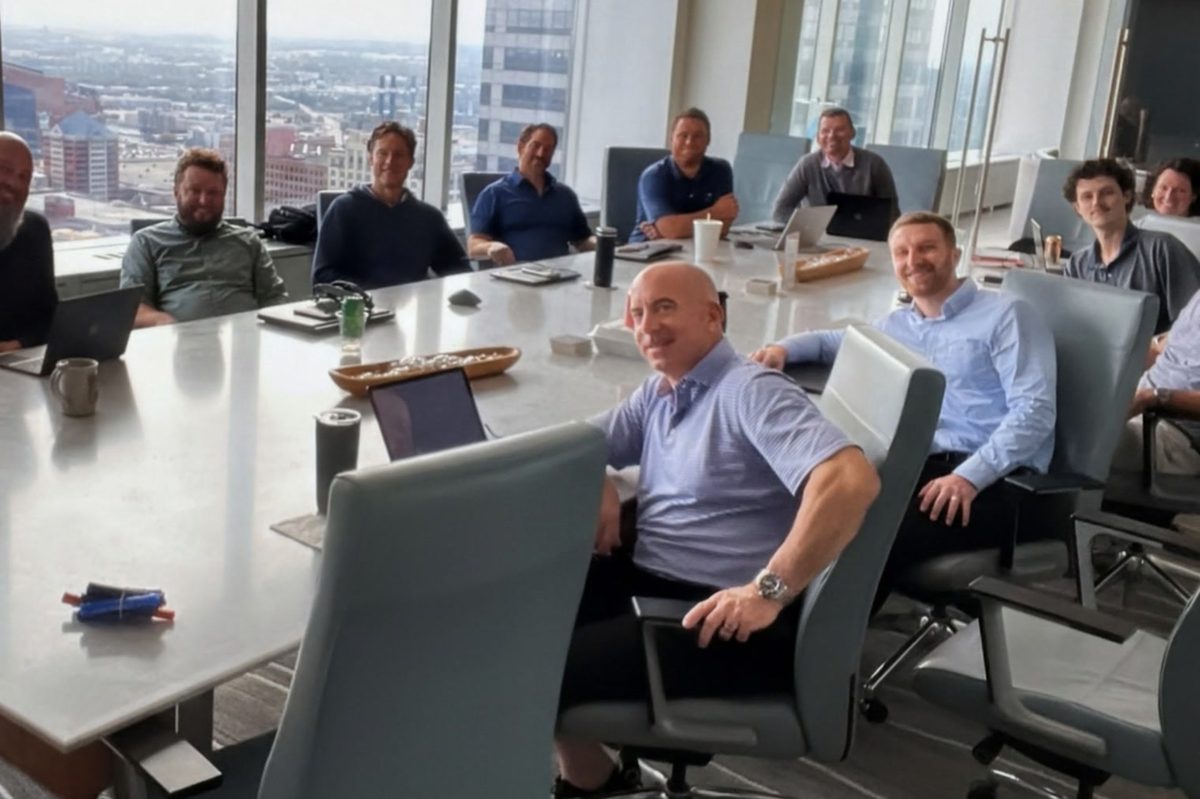
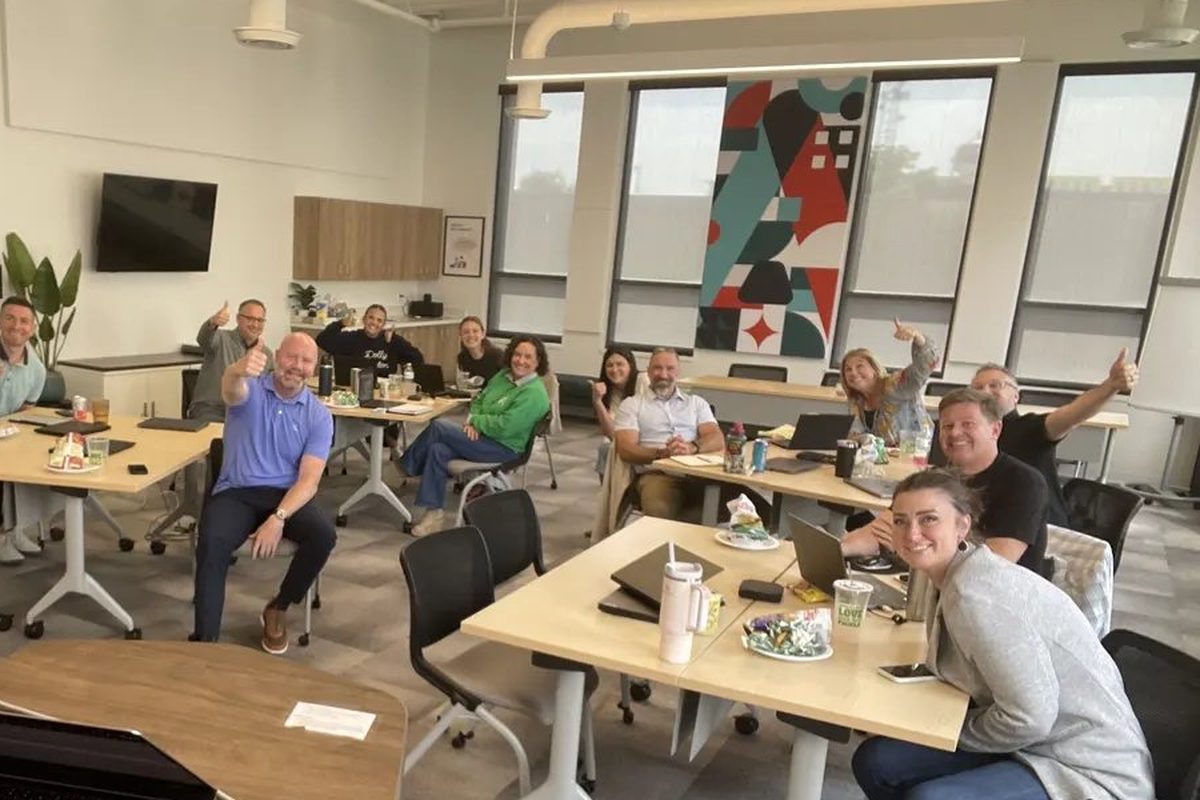
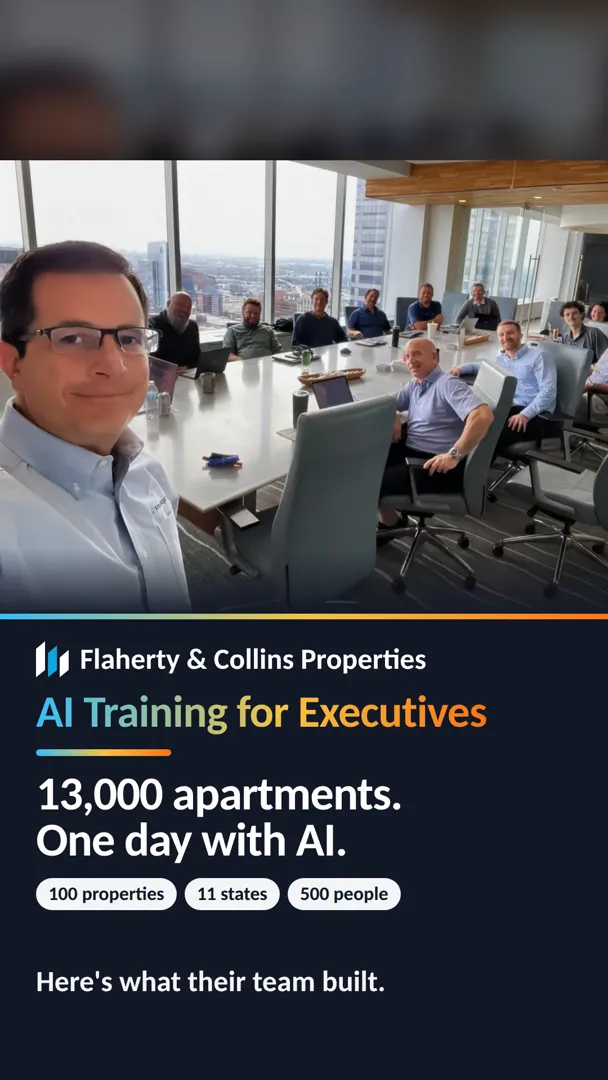
A boardroom of executives at Flaherty & Collins Properties in Indianapolis, laptops open, during a KnowledgeNet workshop

AI Transformation for Executives.

It starts with you. One dedicated day with your leadership team, then four months with an AI consultant and an AI engineer until your agents are running.

  1. Step 1 · AI TrainingDay 1
  2. Step 2 · AI ImplementationMonths 1–4
  3. Agents runningMonth 4
Flaherty & Collins Properties · Indianapolis 13,000 apartments · one day
Recent rooms
Watch this first

Why this starts with you, and not with IT.

Reading a summary of what AI can do has never once changed how a company operates. A few hours of doing it against your own inbox, your own board prep and your own numbers changes what you ask of everybody else.

Full page, with transcript →

Four months from the first workshop to AI agents doing real work.

A day of training changes how a few people work. Changing how a company runs takes the four months after it. This is the whole path, and it starts with you and your leadership team in one room.

  1. Step 1 · Day 1

    AI Training

    A dedicated day on site, every executive working on their own inbox, CRM and numbers.

    $7,500
  2. Step 2 · Months 1–4

    AI Implementation

    Four months to turn the agents your team named into agents running your work.

    • Month 1Agents documented and scoped

      One page per agent, and the deliverables agreed before anything is built.

    • Months 2–4AI Consultant

      Two hours every week, working the plan with your team.

    • Months 2–4AI Engineer

      Four hours a month on the custom integrations your agents need.

    $2,500 a month · four-month commitment

Two steps. Start with Step 1, and decide on Step 2 once you have seen your own agents named.

Real rooms. Real systems.

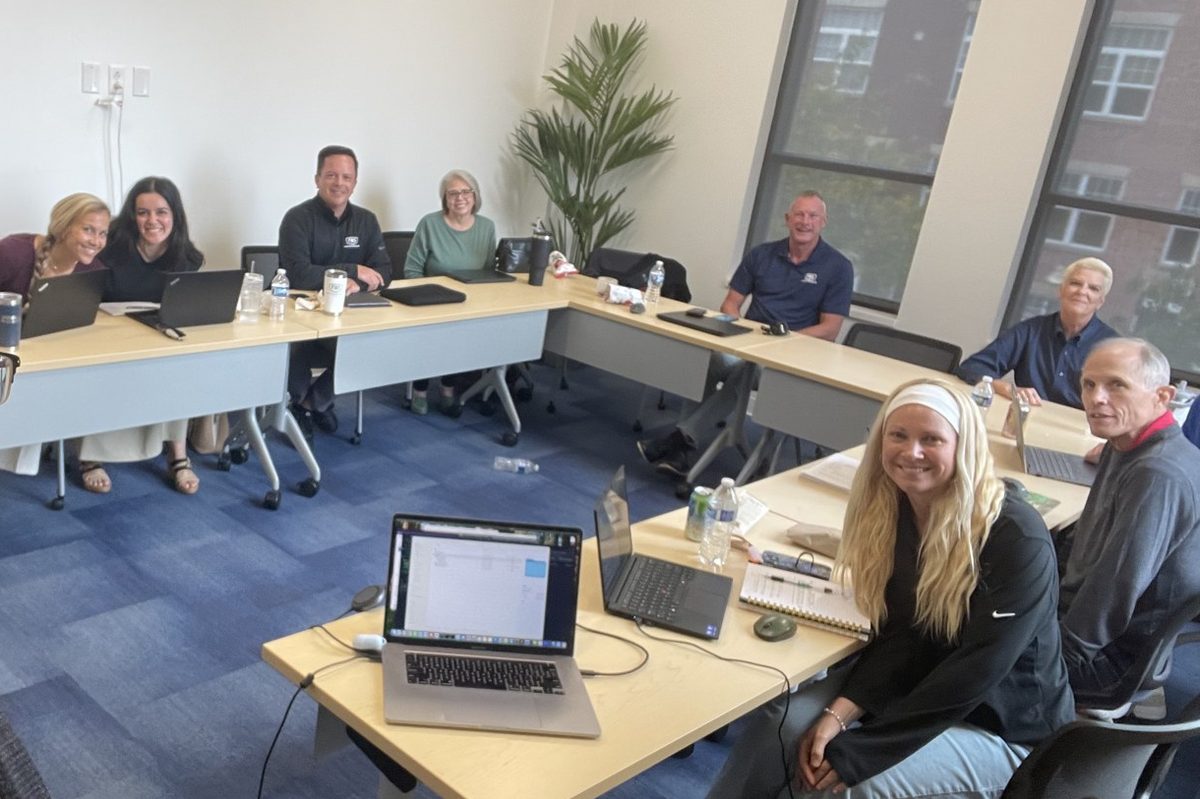
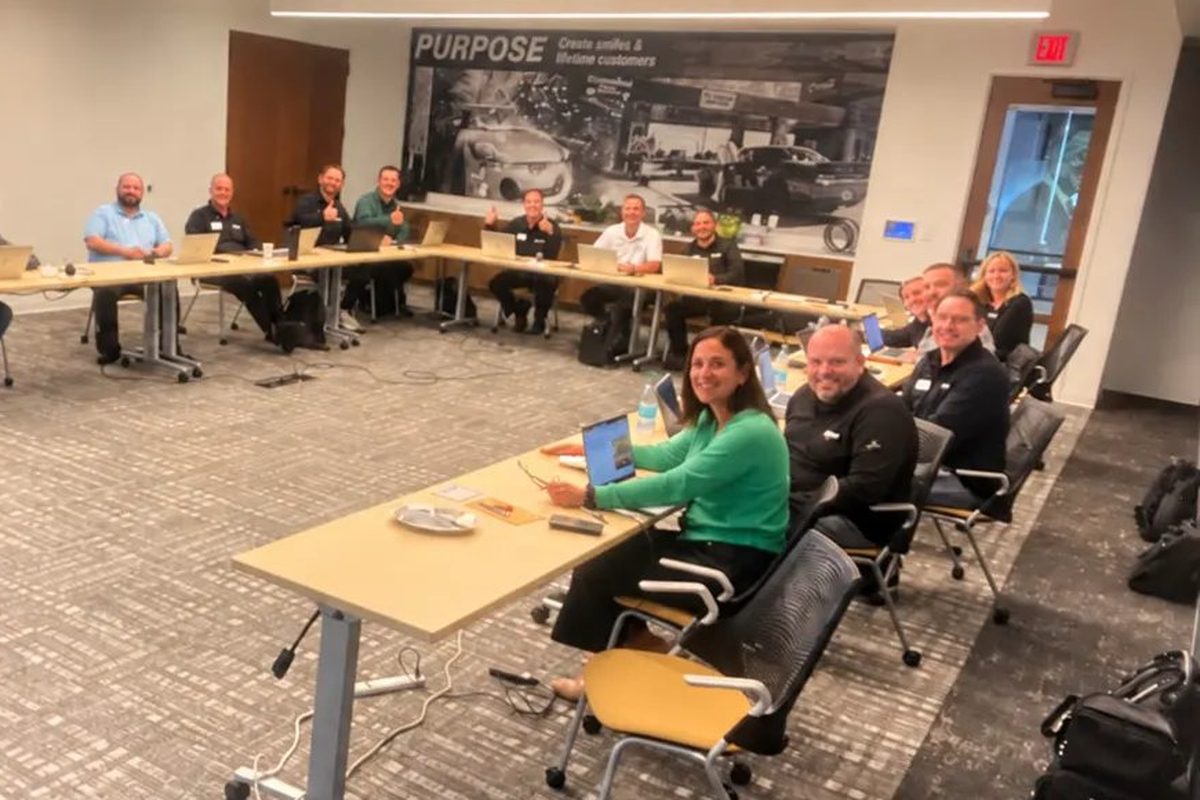
Every one of these ran on the team’s own calendars, inboxes, CRMs and numbers. The photographs are from the rooms. The words are theirs.

In their words.

Nine people, six rooms
Vanguard Cleaning Systems · franchise owners and sales leaders

“One of the most engaging and transformative sessions our team has ever had. Nick and KnowledgeNet had our franchise owners and sales leaders applying AI to their businesses before they left the room. Game-changing.”

David LeePresident, Vanguard Cleaning Systems Vanguard Cleaning Systems
Renovia · Indianapolis Watch the reel →

“I think the biggest factor is what you think you can do, multiply that by 10.”

Brett WilliamsEVP of Operations, Renovia Renovia
SafeCare · Indianapolis Watch the reel →

“It doesn’t feel shady or gimmicky. It’s just truly finding what’s valuable in our company.”

Devon BrewerOwner and CEO, SafeCare SafeCare
ADVISA · Indianapolis

“Nick’s presentation is both thought-provoking and highly practical and useful. He has a gift for talking about the many complexities and existential questions surrounding AI in a very accessible way. I’d put him up there with some of the best speakers we’ve had.”

Heather HaasOwner and CEO, ADVISA ADVISA
ADVISA · Indianapolis

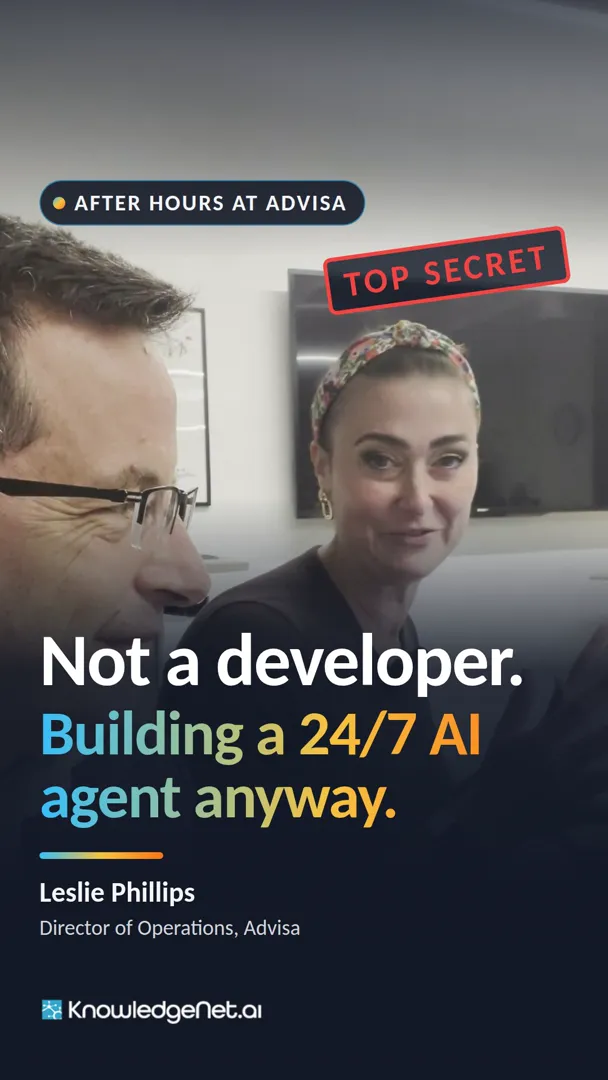
“I spent all day yesterday on the end-of-month work, including payroll, reporting and forecasting, fine-tuning the automations so I can hand them off to my direct report.”

Leslie PhillipsDirector of Operations, ADVISA ADVISA
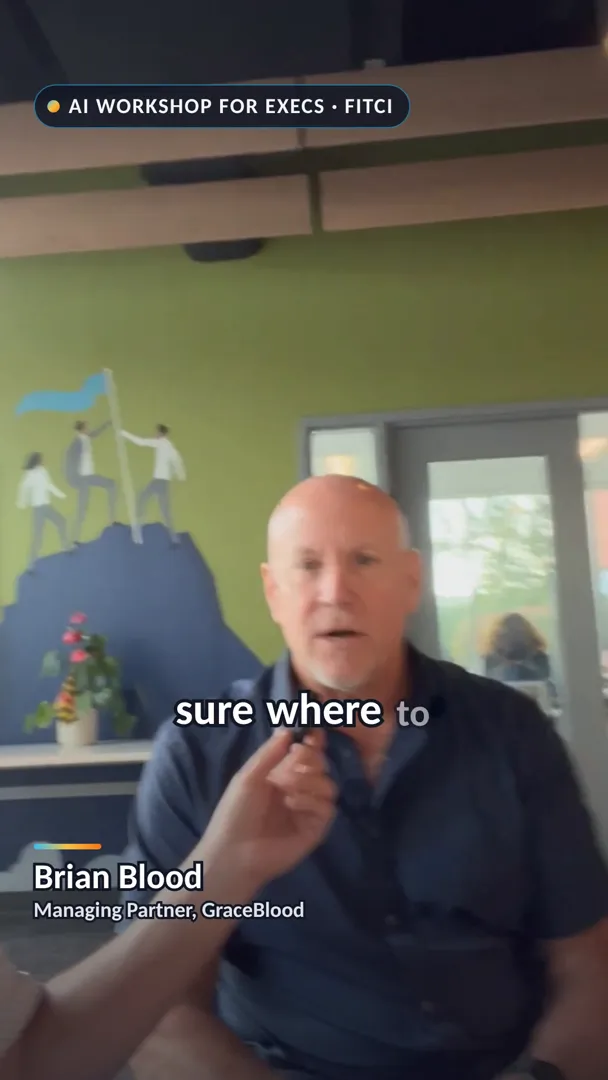
Frederick, Maryland · executives at FITCI See the post on LinkedIn →

“I actually had a sleepless night last night with some of the trends we uncovered in no time at all.”

Brian BloodManaging Partner, GraceBlood GraceBlood
Frederick, Maryland · executives at FITCI See the post on LinkedIn →

“Just created my first app that I’ve wanted to create for quite some time. Did it in under 30 minutes.”

Kathie Callahan BradyPresident and CEO, FITCI FITCI
Frederick, Maryland · executives at FITCI See the post on LinkedIn →

“I came out today with a handful of skills and automations… running automatically for me and saving me a ton of time.”

Tara DavisVP of Sales & Marketing, S&K Roofing S&K Roofing
Frederick, Maryland · executives at FITCI See the post on LinkedIn →

“I do use AI a lot, but you don’t know what you don’t know.”

Ben DavisPrefabrication Manager, Power Solutions Power Solutions

Hear it from the room.

Short films · tap to play
Indianapolis

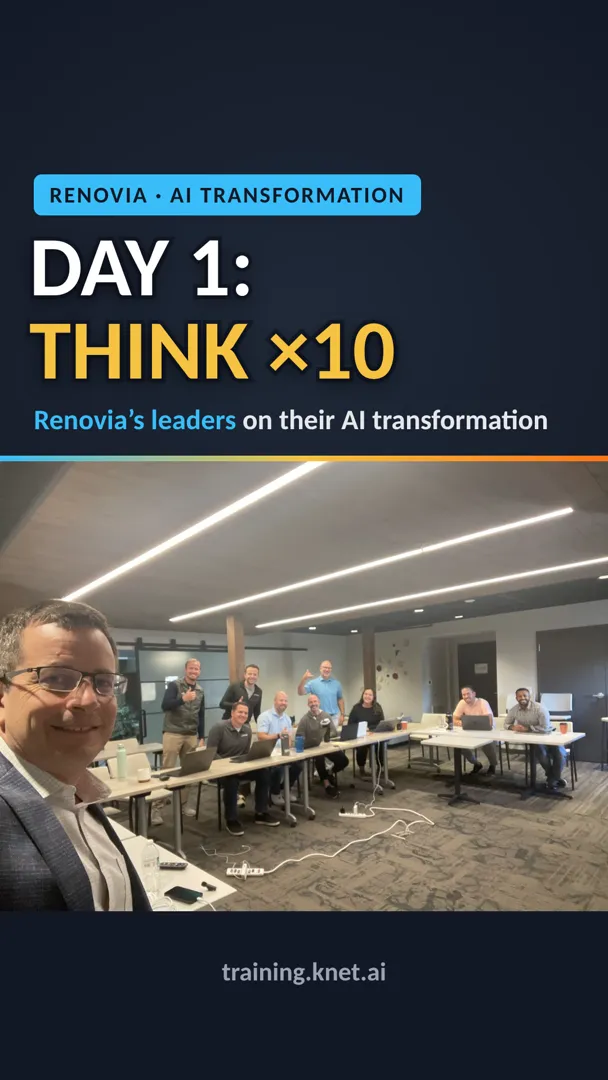
Renovia’s executive team

Day 1 of Renovia’s AI transformation, in the words of Matt Rolfsen, Brett Williams and Jordan Arvin.

Indianapolis

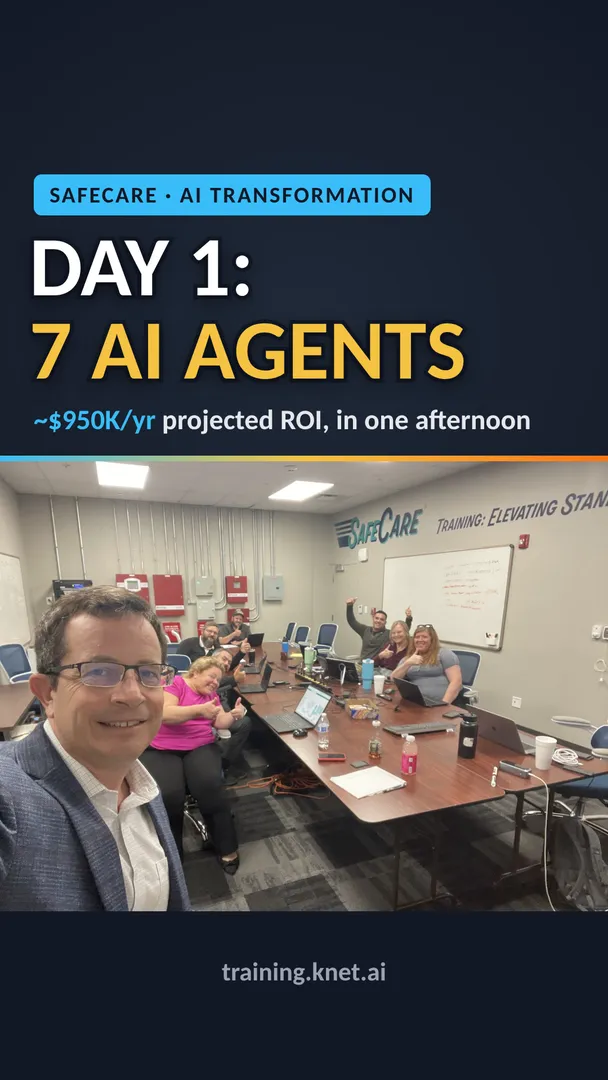
Devon Brewer, SafeCare

Day 1 of SafeCare’s AI transformation: seven AI agents in one afternoon.

SafeCare · Indianapolis

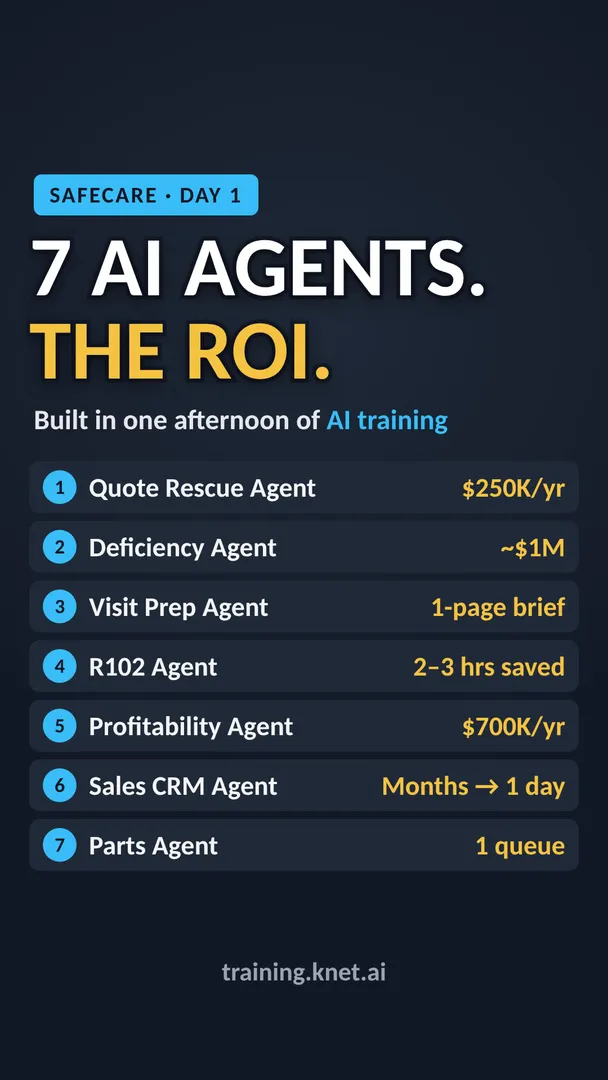
Seven AI agents in one afternoon

Each one aimed at a process the team runs every day, with the ROI they project for it.

Frederick, Maryland

Executives at FITCI

Kathie Callahan Brady, Brian Blood, Tara Davis and Ben Davis on what they built in one day.

Indianapolis

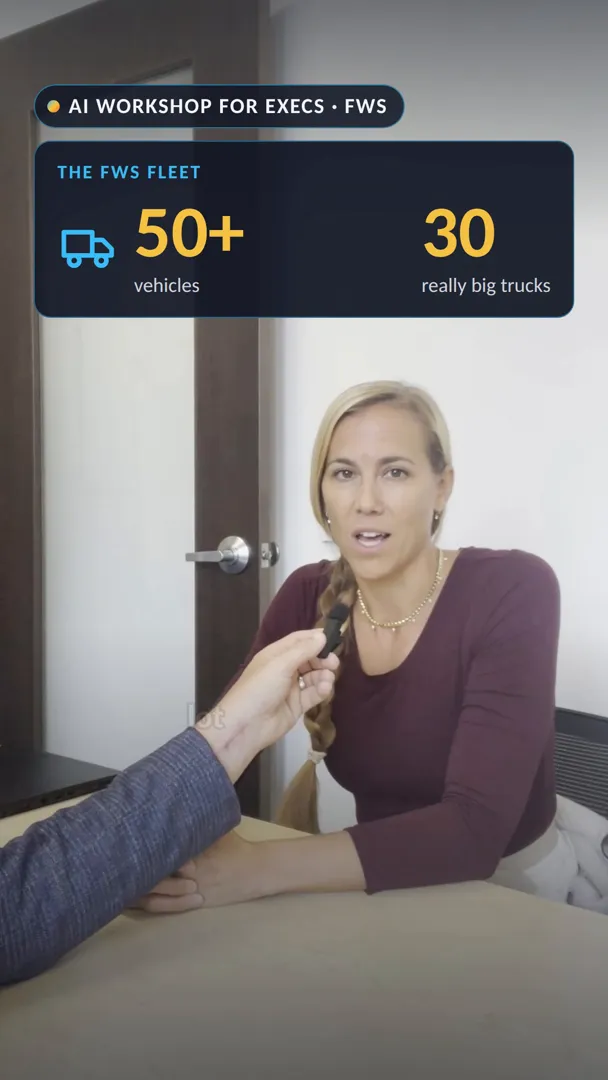
Margo McAuley, FWS

A fleet of 50+ vehicles, and a tool that flags which truck to sell.

Indianapolis

Flaherty & Collins Properties

13,000 apartments. One day with AI.

After hours

Not a developer. Building a 24/7 agent anyway.

Leslie Phillips, Director of Operations at Advisa, after a full day of training.

See the post on LinkedIn →
Step 1 · $7,500

A day of AI training on your own work.

Seven hours, on site, your company only, up to ten seats. Every executive on their own machine, against their own week, and nobody leaves without something running.

3 to 5 days before

Two hours of engineering

A KnowledgeNet AI engineer with your ops or IT lead. Licenses, connectors, permissions and data checked, so on the day we verify instead of install.

9:00 a.m.

Set up against your own role

Email, calendar, CRM, financials and files connected. Everybody on their own machine, working their own accounts. Nobody watches a demo of their business being run by somebody else.

11:00 a.m.

Your own week, worked live

Inbox triage, pipeline call prep, board deck assembly, month-end reconciliation. Each executive picks from their own week.

1:00 p.m.

Build

Automations written, saved and put on a schedule. Analysis and planning worked live on your own data. Then an application, or your first agents.

What each person leaves with
  • Their own accounts connected
  • At least one automation on a schedule
  • Their next agents, named

Something running before we leave.

Every room ends with at least one thing live and on a schedule. If it does not, we have not finished.

Security scoped in writing.

What it can reach and what it can never reach, agreed before we arrive and reviewed with you in the room. It is the first question every room asks, so it is answered first.

After the day: four months to agents running.

Step 2, AI Implementation, is one engagement: $2,500 a month on a four-month commitment. One month to scope the work, then three months building it with your team.

Step 2 · Month 1

Your agents documented, and the work scoped.

Between the end of the training and the consulting kickoff, your AI consultant turns what each executive named into one page per agent. Then we agree the deliverables for months 2 to 4 with you: which agents get built, in what order, and what each month delivers. Nothing starts until you have signed off on that scope.

  • The job it does, in one sentence
  • The systems it reads from and writes to
  • What triggers it, and how often it runs
  • Who owns it, and who approves its output
  • What it can never touch
  • The hours it returns each month, and the effort to build it
One page per agent · illustrative
Controller · Finance

Month-end reconciliation agent

Job
Matches bank feeds to the ledger every night and flags anything that does not tie out.
Reads
Accounting system, bank feeds
Writes
A daily exceptions list to the Controller
Trigger
Nightly, and on demand at close
Approves
Controller
Never
Posts entries or moves money
Returns
About 12 hours a month · 3 days to build
CEO · board prepSales · call prepService · ticket triageOps · scheduling
Step 2 · Months 2–4

An AI consultant, two hours every week.

For three months, your AI consultant spends two hours a week with your team: progress against the deliverables you agreed in month 1, clearing what is blocked, and working with each agent’s owner to get it running.

  • Month 2: first agents live. The quick wins named on the day, in production.
  • Month 3: one in every department. Agents connected to your systems of record.
  • Month 4: measured and handed over. Each agent has an owner on your team, and the hours it returns are measured.

Every week ends with one page: agents live, in build and blocked, hours returned, and the decisions we need from you.

Months 2 to 4, week by week · illustrative
In buildLive
6agents live
3in build
1blocked
41hours returned this week
Step 2 · Months 2–4

An AI engineer for the custom integrations.

Most agents run on the connectors set up during the training. When one needs more, such as a system without a standard connector, a custom API or a data pipeline, your AI engineer builds it: four hours every month for the three months.

Your people own every agent. An agent that lives only in a consultant’s hands leaves when the consultant does, so your ops or IT lead runs them after handover.

Who does what
RoleTheir part
CEOSets the order and clears blockers
Department headsOwn their agents. Define the job, approve the output.
Ops or IT leadAccess and security. Runs the agents after handover.
AI ConsultantTwo hours every week: works the plan and gets agents running with their owners
AI EngineerFour hours a month: custom integrations, tested and handed over
For the people who build

Want your own engineers building agents?

The technical day puts your engineers on one agent shipped into production against a real system of record: MCP servers, agent architecture, gates, evals and a rollback they have already performed once. Same day length, same price as Step 1.

The technical workshop →
Why the top of the company, first

You first. Then the people you lead.

An executive who has already changed the way they work does not have to be persuaded, and cannot be sold to. They set the standard for their own department because they have felt what it is worth. That is why this starts with you rather than in a pilot team.

A day is not enough to change a company. It is enough to change the people who can. The four months after it are how the rest of the company follows.

  • YouOperating with it, not experimenting with it.
  • Your teamEach executive putting AI against their own real responsibilities, in the room, on the day.
  • Every departmentFinance, sales, service, operations. Where digital labor has the greatest impact, identified together.

Two steps. Two prices.

Start with the workshop. Most teams set up a short call to pick the date and the systems; if you already know, reserve the date directly. The four months after it are decided once you have seen your own agents named.

Step 1 · the workshop
$7,500
$750 a seat with the room full

Seven hours, on site, your company only. Up to ten seats. Additional seats, or a second team on the same day, on request.

  • Two hours of AI engineering before the day
  • Email, calendar, CRM, financials and files connected
  • Each person set up against their own role, accounts and files
  • Hands-on session, up to ten seats
  • Automations written, saved and put on a schedule
  • Analysis and planning worked live on your own data
  • Security and access scoped in writing
  • Afternoon build: an application, or your first agents
  • Infrastructure put in place, or provided for the day
  • Each executive’s next agents, named before we leave

If nothing is running by the end of the day, we come back at no charge.

Card, bank transfer, Affirm and Klarna accepted.

Step 2 · AI Implementation
$2,500 a month
Four-month commitment · $10,000 in all

Month 1 scopes the work. Months 2 to 4 build it with your team, with an AI consultant every week and an AI engineer every month.

  • Month 1: your agents documented, one page each
  • Month 1: deliverables for months 2 to 4 agreed in writing
  • An AI consultant, two hours every week
  • An AI engineer, four hours a month for custom integrations
  • A weekly scorecard: agents live, in build and blocked
  • Every agent handed over to an owner on your team

What every room asks before booking.

Do we need licenses or accounts before you arrive?

No. Infrastructure is put in place in the two hours of engineering before the day, or provided for the day. Your ops or IT lead spends those two hours with a KnowledgeNet AI engineer, three to five days ahead.

Which systems does it connect to?

Email, calendar, CRM, financials and files, for each person against their own accounts. If you run on something else, say so on the call and we scope it before the day.

What if our IT team says no?

They are in the room before you are. Security and access are scoped in writing before we arrive: what the assistant can reach and what it can never reach. That document is reviewed with you on the day.

Who should be in the room?

The people who run the company: you and your leadership team, up to ten. Not a pilot group, and not a mixed room of strangers. Each person works on their own machine against their own week.

What do we have at the end of the day?

At least one automation live and on a schedule per room, and each executive’s next agents named. If nothing is running by the end of the day, we come back at no charge.

Do we have to commit to the four months to book the workshop?

No. The workshop stands on its own. Most teams decide on the four months at the end of the day, once they have named the agents they want.

What do the four months cost, and what is in them?

$2,500 a month, on a four-month commitment: $10,000 in all. In month 1 your agents are documented and the deliverables scoped. In months 2 to 4, an AI consultant works with your team two hours every week, and an AI engineer spends four hours a month on custom integrations.

How much of our team’s time do the four months take?

The two weekly hours with your AI consultant, plus time from whoever owns each agent while it is being built.